
How to Price Your Home Right
in Today's Dayton Market
By Jason White
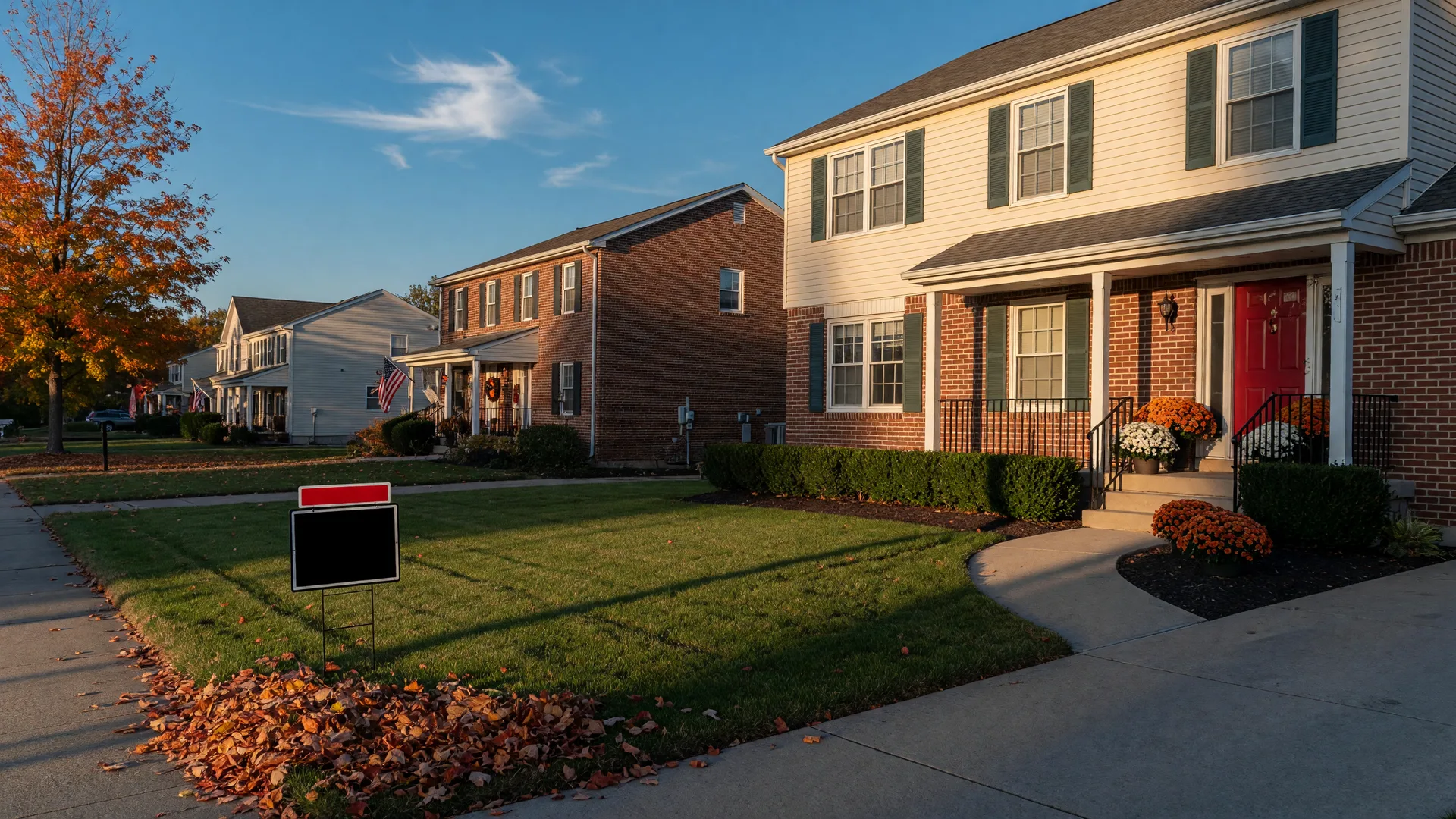
How do you price a home to sell in today's Dayton market? The short answer is that you price it against what the most recent, most comparable sales actually support, not what you hope it is worth and not what it would have sold for two years ago. That sounds simple. In practice, it is the single most important decision you will make as a seller, and it is where I see the biggest gaps between what sellers expect and what the market delivers.
Pricing is strategy, not guesswork. In this post I will walk through the current Dayton-area numbers, why overpricing is the most expensive mistake in the playbook, and the exact way I build a listing price for my sellers, including how mortgage rates and seller concessions fit into the conversation.
The market your price has to work in
Before we talk about your number, here is where the Dayton market stands. The most recent published report from the Dayton Realtors, for July 2026, put the median sale price across the Miami Valley at $275,000, up 1.8% from a year earlier. Year to date through July, the median was $264,900, up 3.8%. Homes closed in a median of roughly 39 days, and the sale-to-list price ratio ran at 100% year to date, meaning well-priced homes were still selling at or very near asking.
The balance of power has shifted, though. Inventory sits near two months of supply, roughly 23% of sellers are trimming their asking prices, and buyers now have real options. Statewide, Redfin reported the typical Ohio home sold at 98.6% of its list price in September 2026, with about 19.6% of Ohio listings carrying a price drop. Those are the numbers your price has to work inside. They tell me the market is healthy and values are stable, but the margin for error has shrunk.
Why overpricing is the most expensive mistake you can make
I have guided hundreds of sellers through this process, and I can tell you the most common self-inflicted wound: pricing the home where the seller hopes the market will go, then watching it sit. The first two to three weeks are the most powerful window a listing has. That is when it gets the most views, the most showings, and the most attention from buyers who are actively comparing homes right now.
When a home is overpriced, it does not just sit quietly. Buyers see the same property at a lower price on every other comparable listing, and they skip it. Their agents see it too. After a few weeks with no offers, the seller has two bad choices: keep the price and watch momentum die, or cut the price and sell from a position of weakness. Nationally, Redfin reported that 21.1% of sellers cut their asking price in the four weeks ending September 20, 2026, the highest September share on record. Roughly three in five U.S. homes sold below their original asking price in August.
The expensive part is not the reduction itself. It is what happens to perception. A home that was priced too high then cut starts to feel like a problem property, even when it is perfectly fine. Buyers wonder what is wrong with it. In a market with as much inventory as we have right now, they simply move on to the next house. Pricing it right on day one protects your strongest window and your negotiating position.
How I build a pricing strategy
There is no formula that works for every house, but there is a disciplined process. Here is how I approach it with every seller:
- Start with the most recent comparable sales. Not the sold prices from last spring, and not what a neighbor tells you their house sold for three years ago. I pull the homes that actually closed in the last three to six months in your immediate area, and I weight the ones most like yours: same style, similar square footage, similar lot, similar updates.
- Adjust for the differences. A finished basement, a newer roof, a renovated kitchen, or a premium lot each moves the number. So do the things that do not show up on paper, like traffic, backing to a busy road, or a dated interior. The goal is a defensible number, not a round one.
- Factor in your neighborhood's position. In top areas like Hunters Ridge and Hunters Pointe in Beavercreek, well-priced homes still attract competitive interest. But even the best neighborhood will not carry a price the market cannot support. Location is an input, not a blank check.
- Test the price against the current buyer pool. With the 30-year fixed rate near 7.4% as of mid-October, the same home costs meaningfully more per month than it did a year ago. Buyers are qualifying for less, and sellers who ignore that reality are pricing to a buyer who is no longer in the room.
- Decide the listing number and the strategy together. There is a difference between pricing at market value and pricing to generate a fast, competitive response. I will walk you through both and which one fits your timeline and your goals.
The result is a price I can defend to a buyer's agent, to an appraiser, and to you. That matters, because a buyer's lender will eventually have an appraiser check the same comparables. A price that is built on real, recent data is a price that survives the transaction.
The price-reduction trap and how to avoid it
Almost every overpriced listing eventually becomes a reduced listing. The pattern is predictable: the home sits for two or three weeks with little traffic, the seller reduces by a small amount that still does not match the market, it sits again, and only after weeks of lost momentum does the price land where it should have been on day one.
HomeLight's research on this is blunt: 44% of agents said that after a home sits without offers, the biggest mistake is waiting too long to reduce the price, and 86% said a home that sits is usually the result of overpricing from the start, refusing to adjust, or making cuts too small to matter. The lesson is not that every seller should slash their price. It is that if the market tells you the number is wrong, the only healthy response is a decisive move to the right number, not a slow bleed.
I would rather have an honest conversation about price before we list than have a frustrated conversation about a stale listing six weeks later. That is what a trusted advisor does. No one benefits from a listing that sits.
Rates and concessions are part of the pricing conversation now
Pricing is no longer just a number on the listing. It is the starting point of a negotiation that increasingly includes seller concessions. Redfin reported that 44.7% of U.S. home sales in August 2026 included a seller concession, the highest August share on record, and buyers are commonly asking for closing cost assistance, rate buydowns, and inspection credits.
Here is what that means for you. When a buyer asks for a concession, it is effectively a price adjustment in another form. I always tell sellers to think about the net number: what you walk away with after price, concessions, and closing costs. Sometimes a full-price offer with a $5,000 closing cost credit nets the same as an offer $5,000 below list with no credit. The strategy is to know your floor before the offers arrive, so you can evaluate every term on its actual value rather than reacting emotionally.
In a rate-sensitive market, a strategically priced home with room to structure a clean deal is a home that actually sells. Pricing with the concession conversation in mind from the start, rather than treating it as a surprise, is what separates sellers who close from sellers who chase.
When below-market or as-is pricing is the right call
There are legitimate reasons a seller might price below what the comps suggest. A home with deferred maintenance or major systems near the end of their life is often better served by an as-is price than by spending thousands on repairs the buyer may want redone differently anyway. A seller on a strict timeline, whether from a job relocation or a personal situation, may choose a price designed to generate a quick, clean offer rather than a patient, full-price one.
The key is that these are deliberate strategies, not accidents. Below-market pricing as a choice can be smart and can create competitive interest. Below-market pricing as a reaction to a listing that already sat is damage control. I will tell you which situation you are in, honestly, before we list.
The bottom line
The right price in today's Dayton market is the price the most recent comparable sales support, adjusted for your home's condition, your neighborhood, and the buyer pool that can actually afford your home at today's rates. It is a number built on data, presented to the market on day one, and defended with confidence.
I have seen homes in every Dayton suburb sell near asking when the price was right and the home was presented well. I have also watched overpriced homes cost their sellers thousands in the long run. The difference was almost never the house. It was the strategy.
Curious what your home is worth in today's market? I will pull your comparable sales, walk you through the number, and show you the pricing strategy that fits your timeline. No pressure, just straight advice.
Have questions about buying or selling in the Dayton area? Call 937-604-0720, email jason@thegaydoshteam.com, or book a consultation at https://calendar.app.google/FoaJL8gM4v3MfsTa8.
Jason White

Curious what your home is worth right now?
I will pull your comparable sales and give you an honest read on today's market, no pressure.
Let's Connect
Ready to build the right
pricing strategy for your home?
I have guided hundreds of homeowners across the Dayton area through confident selling decisions. Let me show you what your home is worth today and how to price it to sell.